
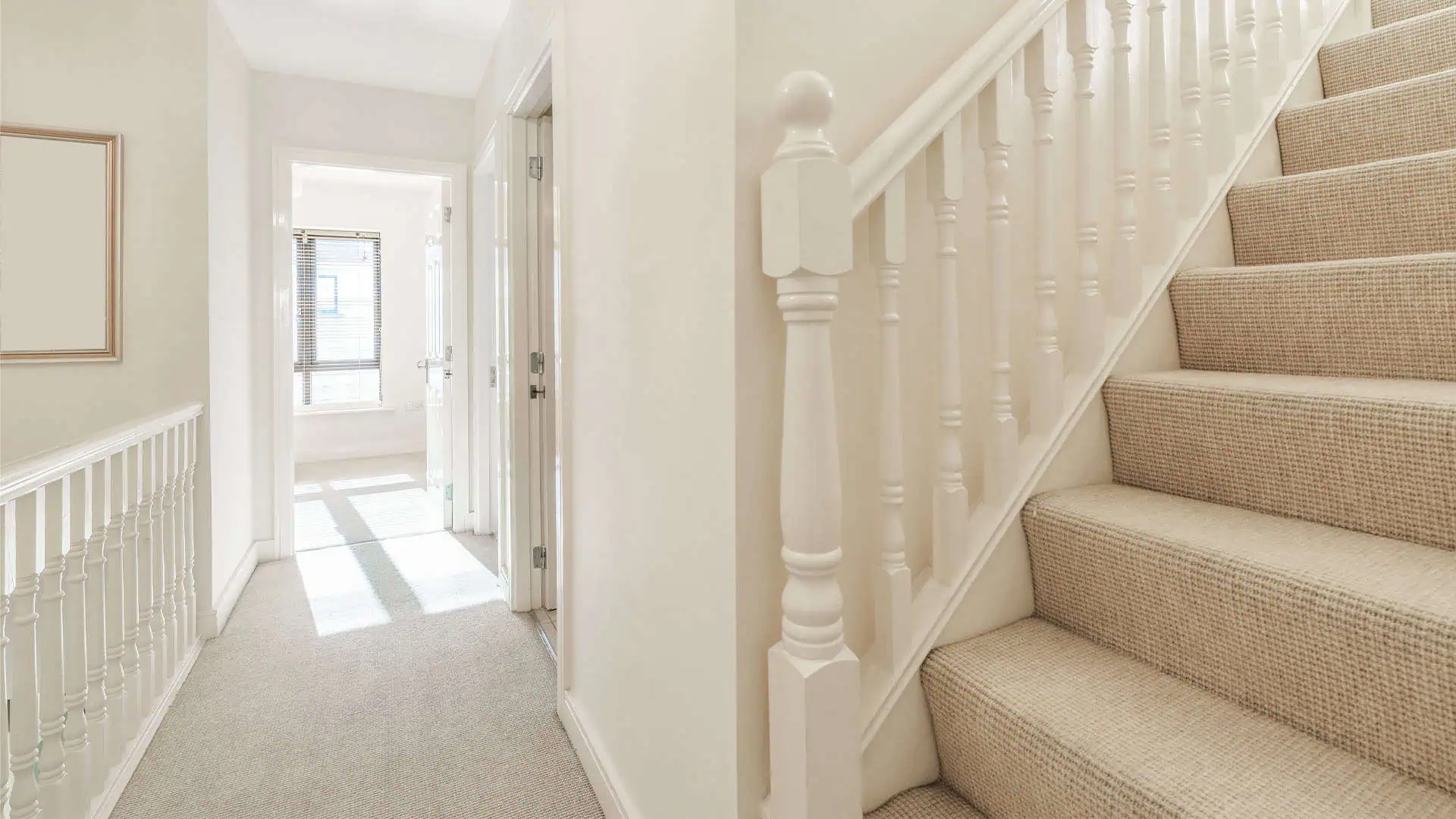
Choosing the right carpet underlay for your stairs is more important than you might think. Go too thin and you sacrifice comfort and sound reduction.
By the end of this guide, you’ll know what underlay thickness, density and materials will perform best on your staircase.
In this guide
Do you need underlay on stairs?
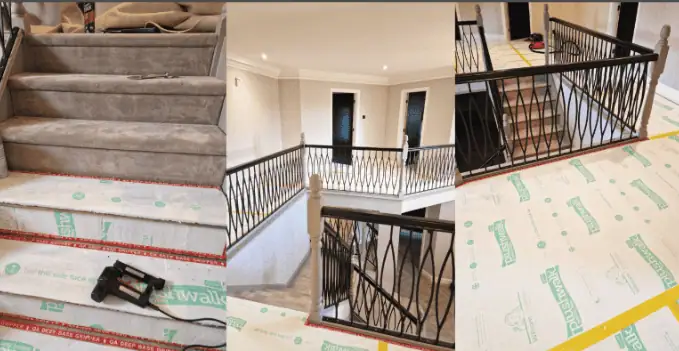
Any carpet can be put down without underlay, but you’ll be replacing it much sooner than you expect. Stair underlay is designed to protect your carpet from premature wear by absorbing the impact of foot traffic, which can be particularly heavy on stairs.
Without that added layer of protection on your staircase, your carpet will feel uncomfortable to walk on and deteriorate faster, costing you more in the long run (prevention is always cheaper than the cure).
Differences between underlay for stairs and other rooms
Your chosen stair underlay can be used in other areas of your home, but the same isn’t always true the other way around. For example, the top priorities for living areas are comfort and warmth, so you might opt for a thick, luxurious underlay – but choosing the right one is important.
With stairs being one of the highest-traffic areas in the house, we need more from an underlay—like increased noise absorption, grip and durability.
So, what should you look for in a stair underlay?
Balancing comfort, durability and safety in a stair underlay
To achieve the ideal combination of comfort, durability and safety in a stair underlay, it’s important to find a product with the right balance of density and thickness.
Underlay thickness explained
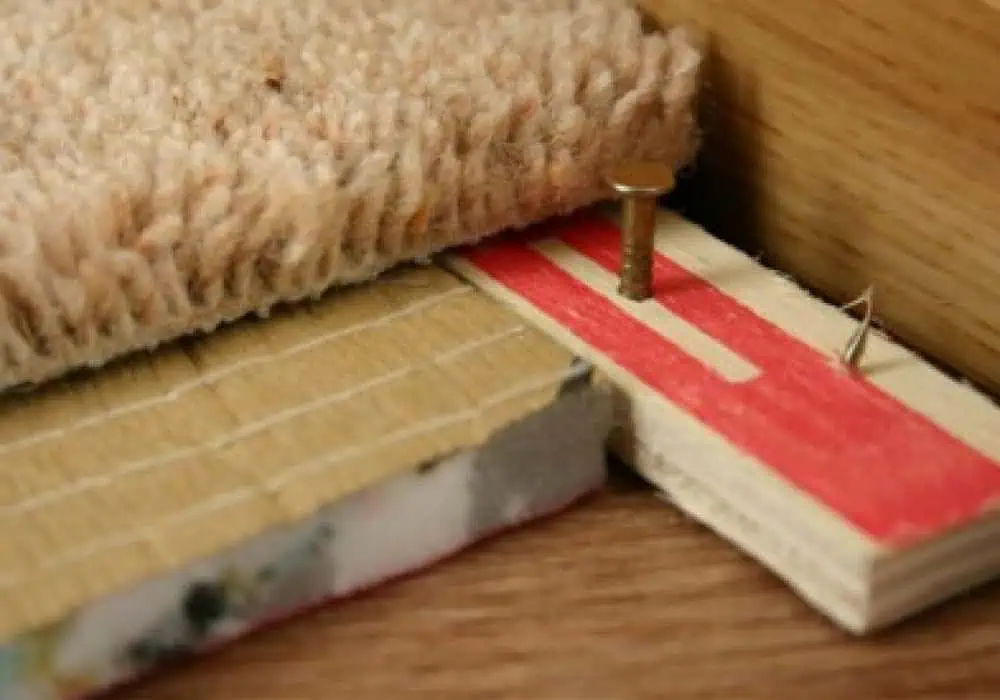
Thickness refers to the height of the underlay. You’d think the thicker the underlay the better, right? NOT on stairs. While thicker underlay may feel cloudlike to walk on, some underlays may not be able to cope with the increase footfall. Underlays like Plushwalk incorporate memory foam so these underlays are ideal for withstanding repeated footfall.
Here’s an overview of thickness ratings to help you decide what’ll work best in your home:
- Up to 6mm: will not offer much in terms of cushioning or sound reduction, but can work well if you’re installing a stair runner (more on this later).
- 6mm to 10mm: provides the ideal balance of comfort and support.
- 10mm+: great for areas that need extra comfort—like living rooms and bedrooms—but only thick underlays like Plushwalk 12mm can withstand the repeated footfall.
Underlay density explained
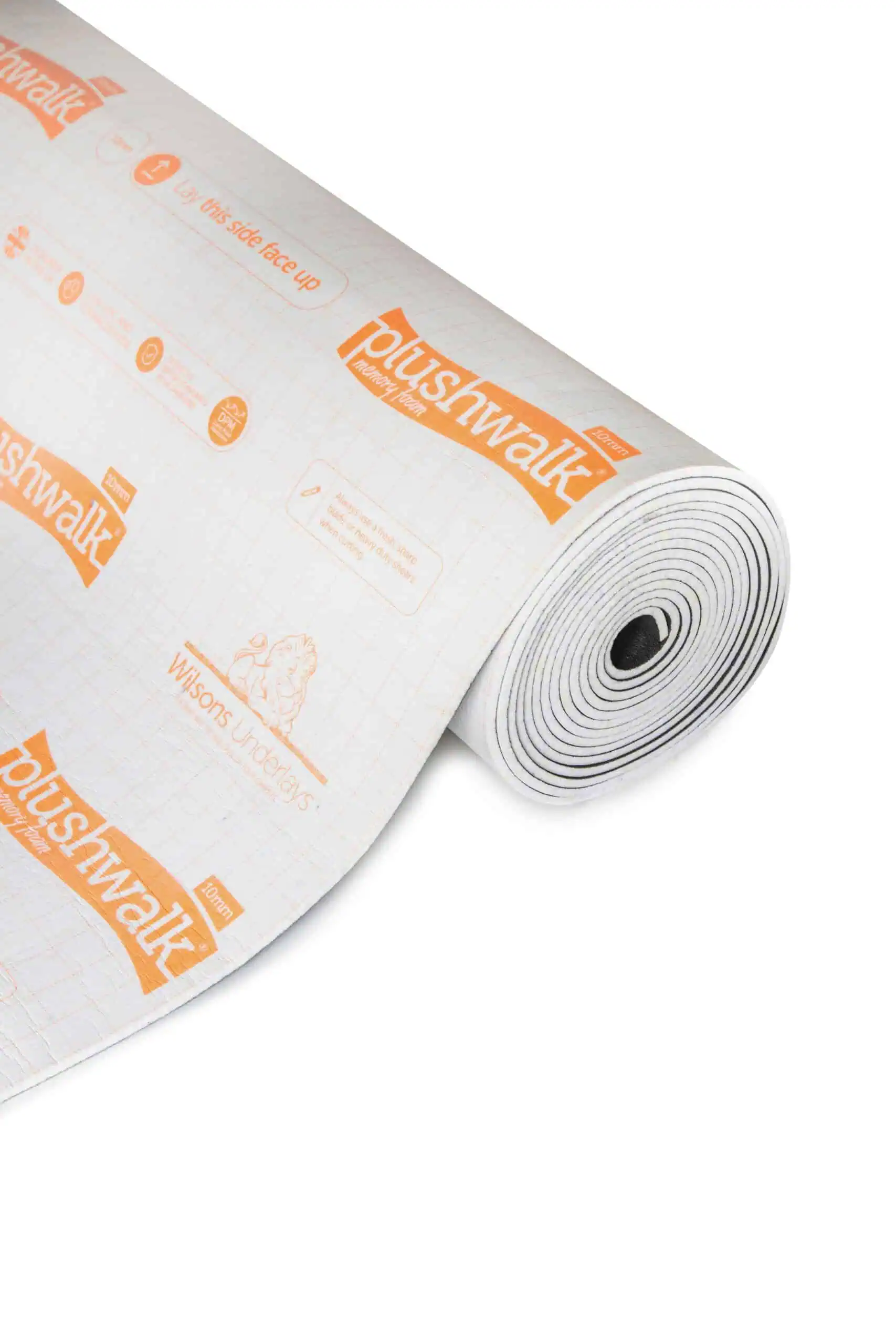
Or favourite stair underlay: Plushwalk 10mm, featured above.
All underlays have a density rating, which measures the amount of material per cubic metre. Higher-density products are known for keeping their shape, being more hard-wearing and providing better stability—all important features on stairs—as well as prolonging the life of the carpet on top of it.
Here’s a quick overview of the density ratings:
- Up to 90 kg/m³: The least durable – suitable for low-traffic areas, like bedrooms.
- 100 – 120 kg/m³: Provides a nice balance of comfort and durability and is ideal for most residential staircases.
- 140 – 300 kg/m³ +: The most durable but least comfortable option – generally designed for commercial environments with extreme footfall or castor chairs / disability chairs.
Plushwalk Underlay – The perfect density and thickness combo for stairs
As you now know, getting the right balance of thickness and density is crucial, which is why they should always be considered in tandem.
A thick, low-density underlay might feel lovely underfoot to begin with, but it will flatten and wear quickly on stairs. In contrast, a thinner, denser product offers more stability, can cope with impact and will last longer.
To hit the sweet spot between comfort, support and performance, we recommend looking for a product with a thickness of 6-10mm and a density of at least 100 kg/m³. Below are some of our favourite options.
1. Plushwalk 10mm
2. Cloud 9 Cirrus
3. Tredaire Softwalk
Extra considerations for open staircases and stair runners
While standard stairs need the right balance of thickness and density for optimal performance, open-tread staircases, staircases with spindles and stair runner installations require some extra thought due to their unique designs.
Here’s what you need to know:
Open tread + open spindle staircases
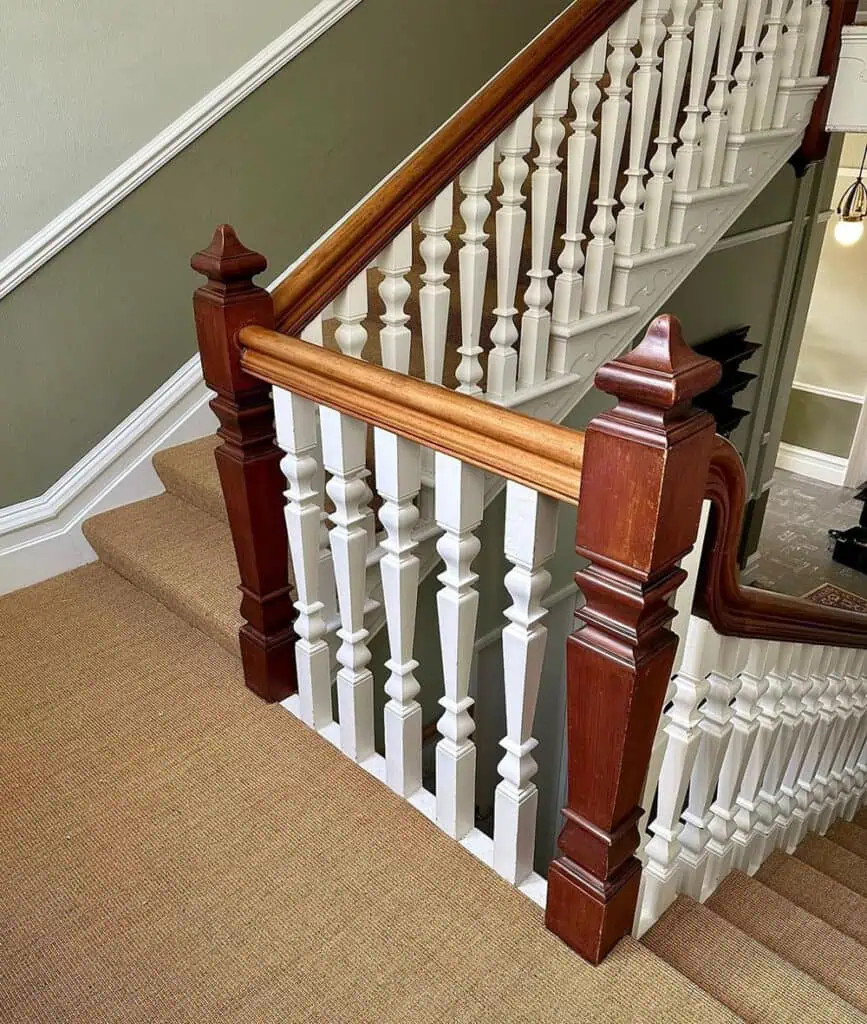
With open stairs, the treads are more vulnerable to edge wear due to foot traffic, so make sure you select a thinner underlay with a higher density rating such as ToughStep Underlay for extra support and durability – especially around those edges – to prevent movement and flattening over time.
Stair runners
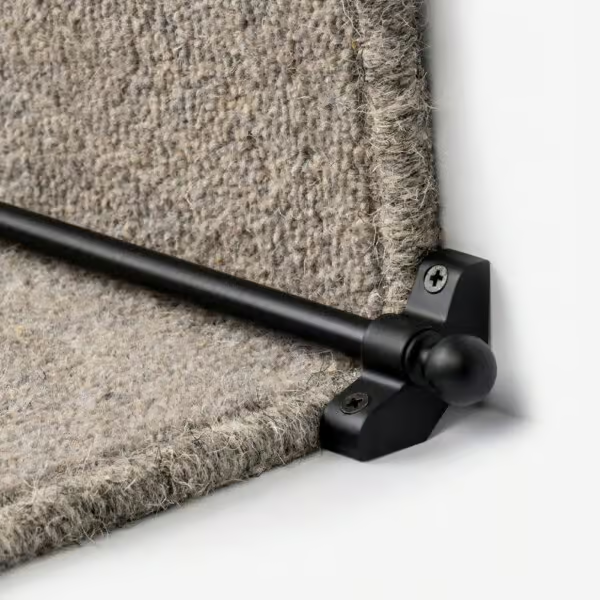
You can buy our stair runners here!
https://www.simplyunderlay.co.uk/shop/stair-rods/
Hopefully, you now understand why underlay thickness and density are such important considerations when it comes to your stairs. This knowledge should allow you to confidently choose a product that will keep your carpet looking its best for longer!
If you need any further help picking the right underlay for your home, get in touch with our team at contact@simplyunderlay.co.uk and we will give you our expert advice.